
|
Basic Information
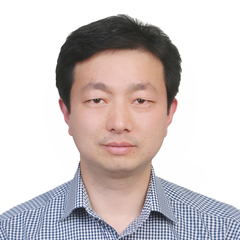 Name:Yangxiaochun Carrer:Professor
Department :Department of Chinese History Email:yangxch@nju.edu.cn
Address :
Personal profile
Yang Xiaochun was born in 1974 in Huzhou, Zhejiang Province. He received his bachelor's in archaeology, master's in Chinese ethnic history, and doctorate in ancient Chinese history from Nanjing University. He has been teaching at Nanjing University since 1999 and is a professor and doctoral supervisor of ancient Chinese history. He specializes in teaching and research in the history of the Yuan Dynasty, history of Chinese ethnic groups (history of the Hui), history of Sino-foreign relations (the Maritime Silk Road), and ancient Chinese stone carvings. Courses For undergraduates: Introduction to Chinese Buddhist Archaeology, Classic Reading (China, by Cho-yun Hsu) For master’s students: Yuan History and Historical Materials (as co-lecturer) For doctoral students: Mongolian History and Yuan History Studies, A Study on Historical Materials of the Maritime Silk Road Research: Monographs: 1. A study of early Chinese Islamic classics. Shanghai Ancient Books Publishing House, Sept. 2011. 2. A study on Chinese Islamic documents in Yuan and Ming Dynasties. Zhonghua Book Company, Aug. 2012.
Collation of Ancient Books: 1. [Yuan] Wang Yun: Yutang Jiahua. In a Series of Historical Materials and Notes in the Past Dynasties: Historical Notes in the Yuan and Ming Dynasties. Zhonghua Book Company, Dec. 2006; Jan. 2011. 2. [Qing] Lu Wenchao: Zhongshan Zhaji, Longcheng Zhaji, Dushi Zhaji. Academic Notes of the Qing Dynasty. Zhonghua Book Company, March 2010.
Selected Works and Translation: 1. Gordon Menzies. 1421: China discovered the world, trans. by Shiyan Group. Jinghua Publishing House, 2005. (Yang Xiaochun: translation of some chapters and preliminary editing for half of the chapters) 2. Yu Taishan (chief editor). Research on ancient history of Inland Eurasia. Fujian People's Publishing House, 2005. (Yang Xiaochun: author of the Qing Dynasty part in Chapter 5 Review of North Asian History Research) 3. Yang Xiaochun (editor). The collection of Zhu Xizu’s works of history and archaeology in the Six Dynasties (Nanyong Academic Classics series). Nanjing University Press, Oct. 2009. (Yang Xiaochun: selection and editing for the introduction part and compilation for the academic chronology) 4. Fan Jinmin et al. (editors). Guide to the study of ancient Chinese history (University Research Curriculum Professional Series). Nanjing University Press, May 2011. (Yang Xiaochun: selection and editing for Chapters 6, 7, and 8, and author for introduction of each chapter) 5. Zhang Yibin & Ke Junheng (chief editors). Nanjing University collection of Jinshi rubbings (1). Science Press, May 2015. (Yang Xiaochun: executive chief editor, responsible for explanation of selected rubbings, detailed catalog, selection description, etc.; English translation of detailed catalog and selection description.) Academic papers (including reading notes, reviews, and book reviews):
1. Research on the mare's milk in Mongol-Yuan period. North West Minorities Research, (1), 1999. 2. Research on the history of the introduction of Buddhist Tripitaka to the Korean Peninsula. Journal of Zen Studies, (4), 2000. 3. Taprobana in the Catalan map of 1375. Journal of Maritime History Studies, (2), 2000. 4. A textual study of the introduction of Buddhist Tripitaka to the Korean Peninsula. In Collected papers of Sino-Korea historical and cultural exchange. Nanjing University Press, 2001. 5. Yangzhou Korean military family in Ming Dynasty and Korean surrenders in early Yuan Dynasty. Studies of Yuan and Nationalities History, (14), Southern Publishing House, 2001. 6. Re-discussion of the names for the unnamed memorial archways in Changan in Tang Dynasty. Collected essays in celebration of the 30th anniversary of the establishment of the archaeology major at the Department of History of Nanjing University. Tianjin People's Publishing House, 2002. 7. Collation of Heyuan Fulu in the Yuanshi Dilizhi. Studies of Yuan and Nationalities History, (15, special issue of papers from the International Academic Symposium on Yuan History in memory of Professor Han Rulin's centenary birth). Nanfang Publishing House, 2002. 8. A summary of studies on Nestorianism in Mainland China over the last twenty years. Trends of Recent Research on the History of China, (6), 2004. 9. Preliminary studies on Chinese tablet inscriptions in mosques of Yuan and Ming dynasties. Studies of Yuan and Nationalities History, (17), Aoya Weekly Publishing Co., Ltd., 2004. 10. A textual study of the history of Sui Dynasty based on The Epitaph of Yuhong. Cultural Relics, (9), 2004. 11. Historical records and the current situation of stone beasts in Nanyang Zongzi Tomb in Han Dynasty. Archaeology and Cultural Relics, 2004 Supplement. 12. A discussion of the cultural dispute among Muslim scholars south of the Yangtze River in late period of the Ming Dynasty: A discourse of stilly explanation of Kalima (S)ah(a)da criticized by Wang Daiyu in his The Real Commentary on the True Teaching. Journal of Nanjing University, (1), 2005. 13. A mistake in Chinese Rare Book Summary. Library Journal, (2), 2005. 14. Chinese cultures in the eyes of Muslim intellectuals from Chinese inscriptions in mosques of Ming. Journal Of Hui Muslim Minority Studies, (1), 2005. 15. China and India.Academic Research, (5), 2005. 16. Korea as in the records of the 13th and 14th century Europe. Sino-Korea Exchanges: Collected Papers of the Fifth International Symposium on Korean Traditional Culture. The Publishing House of China Culture, 2005. 17. Interpunction and revision to a rarity historical recorder about Sui and Tang Chang'an City in Yunlu Manchao. Journal of Chinese Historical Geography, (3), 2005. 18. Corrections to some Chinese translation of Baladi's Muslims in China. Shu Pin, (4), 2005. 19. A mistake in Tongdian as revealed in interpunction and revision. Shu Pin, (3), 2006. 20. A study of the origin of the stone sculptures along the spirit roads of tombs of the Southern dynasties period. Archaeology, (8), 2006. 21. Official name list at the back of the stele Chenghuangmiao Ji in Shengyang in the 12th year of Zhizheng. Studies on the Mongol-Yuan and China's Bordering Area, (18). Shanghai Ancient Books Publishing House, 2006. 22. The relationship between the Ming Dynasty literati Lu Shen and the Hui people: An Arabic jade article unearthed from the tomb of the Lu family in Pudong, Shanghai. Ethno-National Studies in Gansu, (4), 2006. 23. The inscribed octagonal stone from the Tang Dynasty tomb in Guyuan is not a stone column. Beilin Jikan, (12). Shaanxi People's Fine Arts Publishing House, Dec. 2006. 24. One piece of interpunction and revision to Jiankang Shilu. Shu Pin, (2), 2007. 25. A preliminary study of the stele inscriptions in Qingjiang mosque of the Qing Dynasty. Journal of the Second Northwest Minzu Institute, (2), 2007. 26. A study of the Koryo immigrants in Liaoyang and Shenyang during the 13th and 14th centuries. China's Borderland History and Geography Studies, (1), 2007. 27. The Ming Dynasty stone inscription Lai Fu Ming at Nanda Temple in Jinan is not for the elaboration of Islamic teachings. Collected Papers of China’s Hui Studies, 2, ed. by Institute of Hui Studies of Ningxia University. Ningxia People's Publishing House, 2007. 28. 'Yu Guo' and 'Yu He Lin Cheng' in the epitaph of Yuhong of the Sui Dynasty. The Western Regions Studies, (2), 2007. 29. On Wang Daiyu’s The real commentary on the true teachings in the eyes of Hui Muslim scholars in Ming and Qing Dynasties. Guizhou Ethnic Studies, (2), 2007. 30. Discovery and research on Muslim burial carved stone of Yuan Dynasty. Heilongjiang National Series, (3), 2007. 31. An examination of the time of writing Notes on the reconstructs of the Temple for Rituals in the mosque in Dingzhou, Hebei Province. Chinese Culture Research, Autumn 2007. 32. On the cultural succession of Hui people in late Ming and early Qing Dynasties: A case study of QingzhenjiaoKao. Journal of The Second Northwest Minzu Institute, (5), 2007. 33. New research on Huangzhi Guo. Historical Geography, (22). Shanghai People's Publishing House, Dec. 2007. 34. On the date and editor of the Chinese Islamic book Qingzhenjiao Kao. Studies on the Mongol-Yuan and China's Bordering Area, (19). Shanghai Ancient Books Publishing House, Dec. 2007. 35. The setting and changing of administration departments of Shenyang Lu in Yuan Dynasty. Journal of Chinese Historical Geography, (1), 2008. 36. The missing stories of Liangjing Xinji in Jiankang Shilu. China Local Records, (1), 2008. 37. A conjecture of the builder of Wangmugong grotto in Jingchuan County, Gansu, and its date as seen through a colophon in the book Jinshilu. Dunhuang Research, (1), 2008. 38. On the origin and other questions of The real commentary on the true teachings, printed in 1931 by Zhonghua Press. Journal of the Second Northwest Minzu Institute, (3), 2008. 39. Restudy of the identity of the occupant of the tomb with stone animals at Qilinpu in Nanjing. Archaeology, (5), 2008. 40. A brief review on the compilation of Qingzhen Dadian. Studies on the Mongol-Yuan and China's Bordering Area, (19). Shanghai Ancient Books Publishing House, Dec. 2008. 41. On the names of the stone animals on the spirit road of Southern Dynasties’ mausoleums. Southeast Culture, (3), 2009. 42. Re-examination of the two unearthed distillers from Yuan Dynasty. Collected Essays on Yuan History, (11), Tianjin Ancient Books Publishing House, 2009. 43. Mosque and Islam in Wangying Town of Jiangsu Province during the Qing Dynasty and Republic of China. Journal of North Minzu University, (6), 2009. 44. Six topics on the Hui history in the Ming Dynasty. Studies on the Mongol-Yuan and China's Bordering Area, (21). Shanghai Ancient Books Publishing House, Dec. 2009. 45. A brief analysis of the word Xiajing in the Jingxuexichuanpu. Ethno-National Studies in Gansu, (4), 2009. 46. A brief discussion on the understanding by Chinese Muslim scholars of Christianity in the late Qing Dynasty. Multi-ethnic groups and Sino-Western cultural exchanges: New research based on Chinese and Western documents, ed. by Temul. Shanghai People's Publishing House, Jan. 2010. 47. Islamic books outside China quoted by Zhang Zhong's Guizhenzongyi and Chinese scholars' opinions: A primary discussion of some aspects of Islamic circles south of Yangtze River in the late Ming Dynasty. Studies on World Religions, (3), 2010. 48. A correction and supplement to the owner of the tomb with stone animals at Qilinpu in Nanjing. Southeast Culture, (3), 2010. 49. Some discussions on Qingjingsi ji written by WU Jian of the Yuan Dynasty. Journal of North Minzu University, (5), 2010. 50. An underappreciated inscription on the mosque stele of the Ming Dynasty: Ma Zhijun’s The stele record of reconstruction of the mosque in Xing'an. Ethnic Studies in Gansu, (3), 2010. 51. Notes on the stele Gurun Mosque records of Ming Dynasty in Zhenjiang. Studies on the Mongol-Yuan and China's Bordering Area, (22). Shanghai Ancient Books Publishing House, Sept. 2010. 52. The relations among the maps of Maps of integrated lands and regions of historical countries and capitals: A preliminary study centered on textual data. In Research on Daming hunyitu and Honil gangni yeokdae gukdo jido: The world map and world geography knowledge of East Asia in the late middle ages, ed., by. Liu Yingsheng. Phoenix Publishing House, Dec. 2010. 53. The Islamic scholar Ma Minglong’s life and writings in Ming and Qing Dynasties. Research on the Hui, (1), 2011. 54. The negotiation issues with Korea and North Korea about Liaodong exiles in the early Ming Dynasty: Reading notes of the Korean literature Official. (Korea) Journal of Korean Culture, (16), Feb. 2011. 55. Cross-cultural footprints in the medieval era (Book review). China Reading Weekly, June 22, 2011, page 9. 56. A study of Islam and the dialogue between Muslims and Christians in the late Qing Dynasty and the early Republic of China. Studies on World Religions, (3), 2011. 57. An overview of the collection, sorting and publishing of Chinese Islamic classics in Ming and Qing Dynasties over the past 150 years (1858-2008). Studies on the Mongol-Yuan and China's Bordering Area, (23). Shanghai Ancient Books Publishing House, Dec. 2011. 58. The International Institute and the dialogue between Muslims and Christians in the late Qing Dynasty and the early Republic of China. LOGOS & PNEUMA: Chinese Journal of Theology, (36), 2012. 59. The carving process, carvers, and style of Buddhist statues in the Yuan Dynasty at Hangzhou’s Feilaifeng Hill: A comprehensive study of statue inscriptions. In Quinsay, a city visited by Marco Polo: A collection of research essays on Hangzhou in the Yuan Dynasty, ed. by Li Zhian & Song Tao. Hangzhou Publishing House, May 2012. 60. An investigation of the life of Zhang Zhongsheng, an Islamic teacher in the late Ming and early Qing Dynasties. Studies on World Religions, (4), 2012. 61. Three notes on the Dayuan Tongzhi and Zhizheng Tiaoge. Studies on the Mongol-Yuan and China's Bordering Area, (23). Shanghai Ancient Books Publishing House, Oct. 2012. 62. Supplemental studies to the distribution of Hui people in Yuan Dynasty. Journal of North Minzu University, (1), 2013. 63. Inscriptions on stone gate towers at Dengjiatuo and the tomb occupant. Journal of National Museum of China, (2), 2013. 64. Discussion on the identity of the owners of tomb stone animal remains of Southern Dynasties in the two places of Shi Ma Chong, Shang Fang Town, and Shi Zi Chong, Qixia Mountain, Nanjing City. Cultural Relics In Southern China, (2), 2013. 65. A textual study of the relationship between Book of Sui: Chronology of the western regions and Sui Pei Ju's Pictures of the western regions. Historical Geography, (27). Shanghai People's Publishing House, June 2013. 66. Six notes on Chinese Islamic classics in Ming and Qing Dynasties. Studies on the Mongol-Yuan and China's Bordering Area, (25). Shanghai Ancient Books Publishing House, Jun. 2013. 67. A study of the Ming Dynasty stele of the Reconstruction of Jiming Temple preserved in the temple in Nanjing. Southeast Culture, (5), 2013. 68. A study of Tang Dynasty monk Qingche's Jinling Pagoda Temple Records. Journal of Nanjing Xiaozhuang University, (5), 2013. 69. A brief discussion on Xanadu in the history of the ancient Chinese capital system. Studies on the Mongol-Yuan and China's Bordering Area, (26). Shanghai Ancient Books Publishing House, Dec. 2013. 70. Reading the chronology of Yuanshi, epitaphs of Yuan Dynasty unearthed in New China. Collected Essays on Yuan History, (14). Tianjin Ancient Books Publishing House, Jan. 2014. 71. On the date of compilation of the Origin of Huihui and some related questions. Journal of North Minzu University, (2), 2014. 72. Discussion on Hui Muslim’s religious education through the archives about the Hai Fu-run case in 1782. Research on the Hui, (2), 2014. 73. A textual research of Yuanshi records of promoting county to prefecture in 1295. Wen Shi, (2), 2014. 74. An argument against the punctuation of Historical records: Southwestern minority chronology. Studies on the Mongol-Yuan and China's Bordering Area, (27). Shanghai Ancient Books Publishing House, June 2014. 75. Southwestern minority, western minority and southern minority: Another key to interpretating Historical records: Southwestern minority chronology. Governance: The frontier governance practice in pre-modern China and the social changes in border areas, ed. by An Jiesheng & Qiu Zhonglin. Sanjin Publishing House, Dec. 2014. 76. On the connotation of Jing in Jingjiao (Nestorism). Studies on the Mongol-Yuan and China's Bordering Area, (28). Shanghai Ancient Books Publishing House, Dec. 2014. 77. Nine supplements to the newly announced inscriptions on Buddhist statues. Beilin Jikan, (20). Sanqin Publishing House, Dec. 2014. 78. Preliminary studies of the population distribution of Hui people in mainland China in the second half of the 18th century: Focusing on the archives of the 46th and 47th years of Qianlong in Qing Dynasty. Studies on the Mongol-Yuan and China's Bordering Area, (29). Shanghai Ancient Books Publishing House, June 2015. 79. Re-study of the inheritance of the two mausoleums of the Southern Tang Dynasty from the mausoleum system of Tang Dynasty. Collected papers on the history and culture of the Southern Tang Dynasty, ed. by the Two Tombs of Southern Tang Dynasty Cultural Relics Management Institute. Nanjing Publishing House, 2015. 80. Ancient maritime and religious praying: Notes on some stele inscriptions related to Zheng He’s voyage. Studies on the Mongol-Yuan and China's Bordering Area, (30). Shanghai Ancient Books Publishing House, Dec. 2015. 81. Northern Chinese society in the eyes of Goryeo people in late Yuan Dynasty: Some notes on Han’er (Northern Chinese) in Nōgoltae (True Chinese). Journal of Changzhou University, (2), 2016. 82. New achievements in the study of Islamic inscriptions in China: Reading Annotation and Translation of Arabic and Persian Stele Inscriptions in Fenghuang Mosque in Hangzhou. Journal of Hangzhou Literature and History, (2), 2016. 83. A study of the Hui nobility Da’s family with the mosque inscriptions. Jiangsu Muslim, (2), 2016. 84. Understanding and criticism of Christianity by Hui religious scholars during the Republic of China: Taking the Four Great Imams as examples. Journal of North Minzu University, (3), 2016. 85. Annotations and examinations of Jiangsu-and-Zhejiang Province of Yuanshi Dilizhi (I). Studies on the Mongol-Yuan and China's Bordering Area, (31). Shanghai Ancient Books Publishing House, June 2016. 86. Supplementary discussion on the geographical locations of Ning Mausoleum for Emperor Wu of the Southern Dynasties and Changning Mausoleum for Emperor Wen: Reviewing Zhu Xizu's Survey report on mausoleums of the Six Dynasties. New Critical Review, (1). Nanjing University Press, Oct. 2016. 87. Six supplements of interpunction and revision to Yuanshi. Studies on the Mongol-Yuan and China's Bordering Area, (32). Shanghai Ancient Books Publishing House, Dec. 2016. 88. A brief discussion on the understanding and criticism of Christianity by Hui religious scholars during the Republic of China: Taking the Four Great Imams as examples. Indigenous experience: The encounter and dialogue of Christianity and Islam in China, (Hong Kong) Alliance Bible Seminary, 2017. 89. Annotations and examinations of Jiangsu-and-Zhejiang Province of Yuanshi Dilizhi (II). Studies on the Mongol-Yuan and China's Bordering Area, (33). Shanghai Ancient Books Publishing House, June 2017. 90. An examination of Real reason to awaken the lost in Wang Daiyu's The real commentary on the true teachings: A brief discussion on the value of Real reason to awaken the lost. Selected papers on the dialogue between Islamic and Confucian civilizations, ed. by Hua Tao & Yao Jide. Yunnan University Press, 2017. 91. Fenghuang Mosque in Hangzhou, ‘Ala’ al-din and Hui people's settlement in Hangzhou in the Yuan Dynasty: A brief discussion on Yuan Dynasty as the peak of ancient Hangzhou's foreign exchange. Journal of Hangzhou Literature and History, (3), 2017. 92. An analysis of the situation of Hangzhou Muslims in the writings of Western travelers in the Yuan Dynasty. Studies on the Mongol-Yuan and China's Bordering Area, (34). Shanghai Ancient Books Publishing House, Dec. 2017. 93. A review of the “Islam and Confucianism” of Hui scholars in Ming and Qing Dynasties: Focusing on prefaces and postscripts of Chinese Islamic classics in Ming and Qing Dynasties. Nanjing Muslim, (1), 2018. 94. Origin of Huihui and the construction of the origin of the Hui ethnicity in the context of Chinese culture. Ethnicity Studies, (3), 2018. 95. On the historical records of transportation through South China Sea in The stele on the reconstruction of the Haining Zen Sect Temple in Kunshan Prefecture, Taicang, Jiangsu, in Yuan Dynasty. The Journal of South China Sea Studies, (4), 2018. 96. Collection of sources on Ding Peng family,a Hui family that lived in Hangzhou city in the late Ming and early Qing period and reconstruction of Ding family’s family tree. Studies on the Mongol-Yuan and China's Bordering Area, (35). Shanghai Ancient Books Publishing House, June 2018. 97. A review of the “Islam and Confucianism” of Hui scholars in Ming and Qing Dynasties: Focusing on prefaces and postscripts of Chinese Islamic classics in Ming and Qing Dynasties. The Silk Road Cultural Studies, (3). The Commercial Press, Aug. 2018. 98. The currency problem in the maritime trade around Southeast Asia and Indian Ocean during the Yuan Dynasty: Synthesis and discussion of related records in Daoyizhilue. Studies on the Mongol-Yuan and China's Bordering Area, (36). Shanghai Ancient Books Publishing House, Dec. 2018. 99. Examples of contrastive reading between collection of epitaphs and stone inscriptions of the Yuan Dynasty. Collected essays on Yuan history, (15, an issue in celebration of the 90th birthday of Mr. Cai Meibiao. Tianjin Ancient Books Publishing House, Jan. 2019. 100. On the usage of tin ingots found on the shipwrecks from 10th to 14th centuries in the Southeast Asia Sea Area. Studies of Maritime History, (13). Social Science Academic Press, April 2019. 101. New knowledge of Europeans about China geography during the Mongolian era (1245-1355). Journal of Zhejiang Normal University, (3), 2019. 102. The Sogdian tomb owner’s epitaph tracing back to ancestors’ entering China: An analysis of the process of the sinicization of the Sogdians in the middle ages. Eurasian regional history research and the Silk Road: Collected works in commemoration of the 10th anniversary of Mr. Takeshi Hamashita’s teaching at Sun Yat-sen University, ed. by Wei Zhijiang et al. Social Science Academic Press, 2019, pp. 59-132. 103. The Hui family memory and national history in the context of Chinese history: An analysis of Uighur descriptions related to Hui people in the Qing Dynasty. Studies on the Mongol-Yuan and China's Bordering Area, (37). Shanghai Ancient Books Publishing House, June 2019. 104. An examination of present Minshi Shilu from Guochu Qunxiong Shilue. Journal of Chinese Literature and History, (1), 2020. 105. The two Chinese Islamic classics in the history of Islam in Hangzhou: On the doctrine of Islam and The necessity of the five pillars of Islam. China Muslim, (3), 2020. 106. Notes on the geographical names listed under Nanpi in Zhu Fan Zhi. Journal of Maritime History Studies, (2), 2020. Research results
Teaching situation
Awards
Represents results
|
