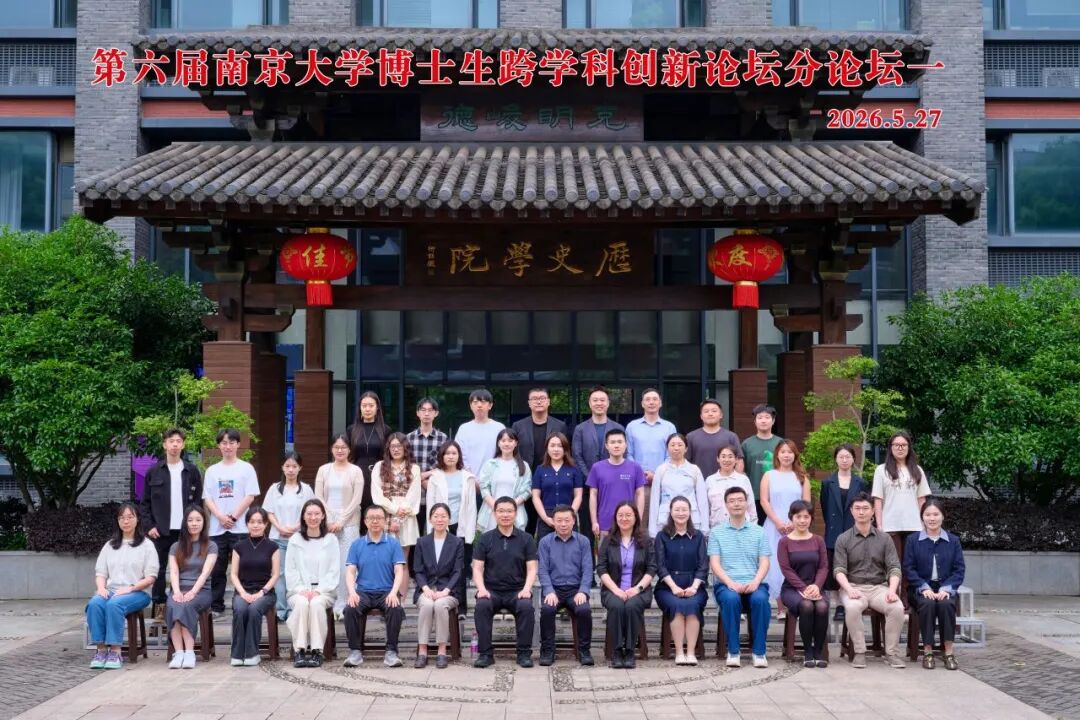
The 15th Five-Year Plan has made strategic arrangements for the full implementation of the “Artificial Intelligence Plus” initiative. To further advance the fundamental task of fostering virtue through education in the new era, cultivate high-caliber interdisciplinary talents who are adapted to the digital age, equipped with digital literacy and innovative capacity, and marked by both moral integrity and professional competence, and to promote the role of innovative talent cultivation in serving local economic and social development, the Sixth Nanjing University Interdisciplinary Innovation Forum for Doctoral Students was jointly organized by the Student Affairs Office of NJU CPC Council, the Graduate School, and the Nanjing University–China Mobile Joint Research Institute.
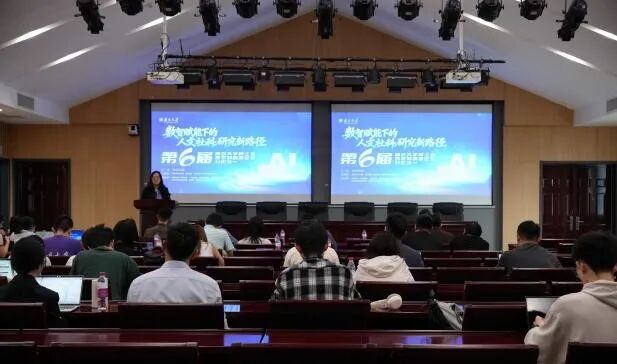
Opening Ceremony
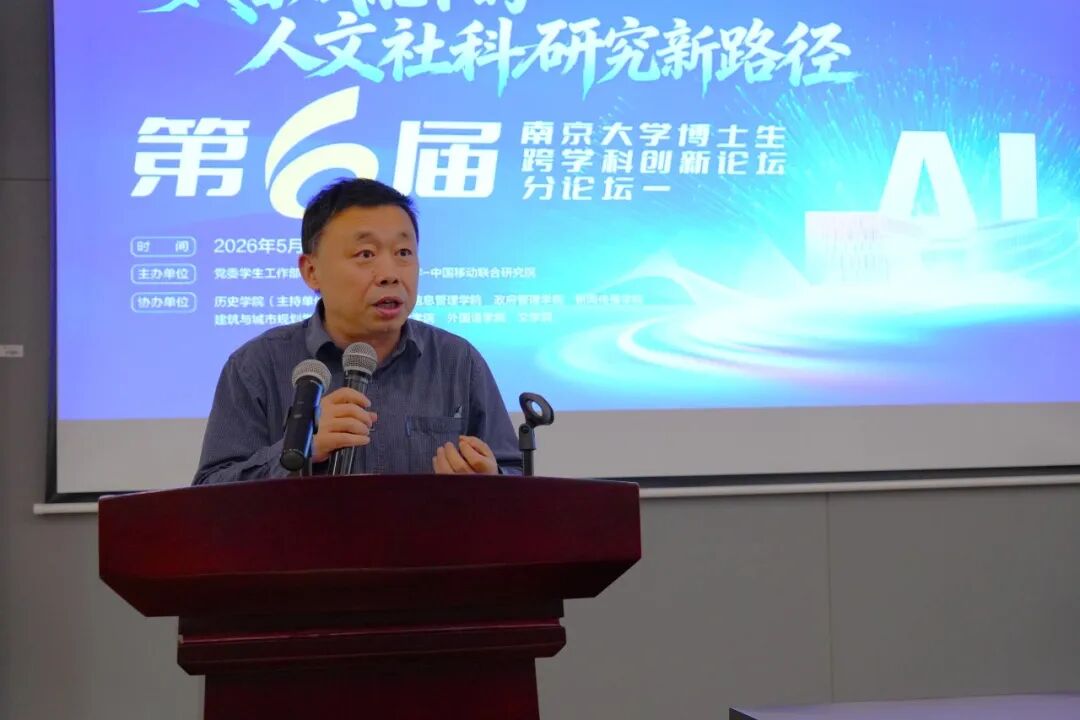
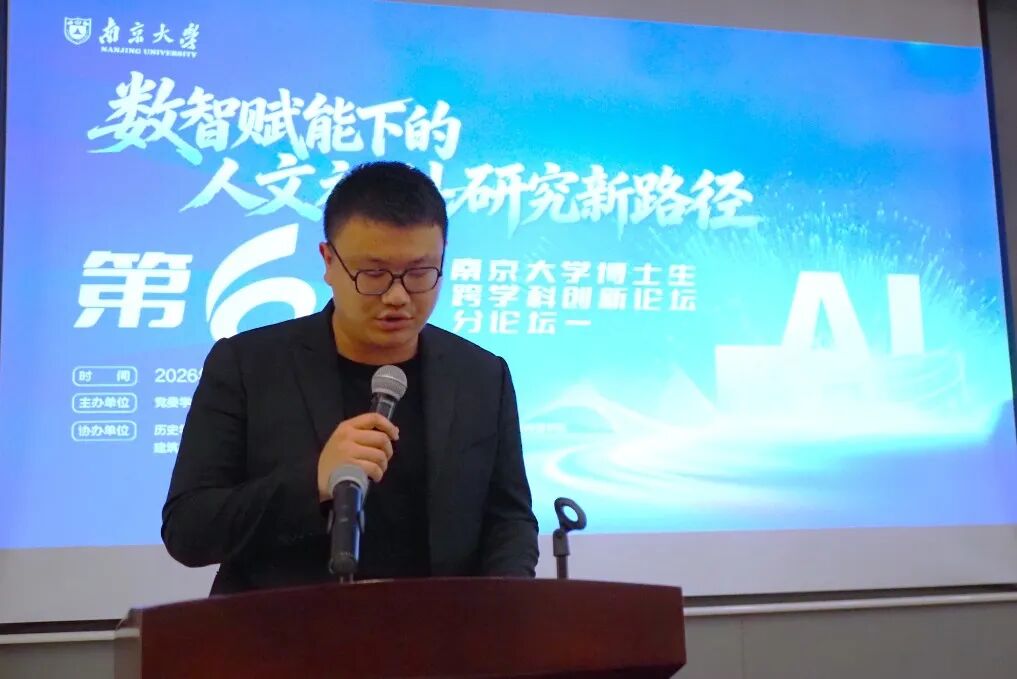
On May 27, 2026, Sub-forum I, themed “New Pathways for Humanities and Social Sciences Research Empowered by Digital Intelligence,” was held at the School of History. Li Hao, Director of Li Hao, Director of the Student Affairs Office of NJU CPC Council, Liu Ying,Party Secretaryof the School of History, and other distinguished guests attended the event. The forum brought together discussants from its four parallel sessions and 41 doctoral students from the School of History, School of Social and Behavioral Sciences, School of Information Management, School of Government, School of Journalism and Communication, School of Architecture and Urban Planning, School of Business, School of Philosophy, School of Foreign Studies, and School of Liberal Arts. The opening ceremony was presided over by Luo Xiaoxiang,Associate Dean of the School of History.
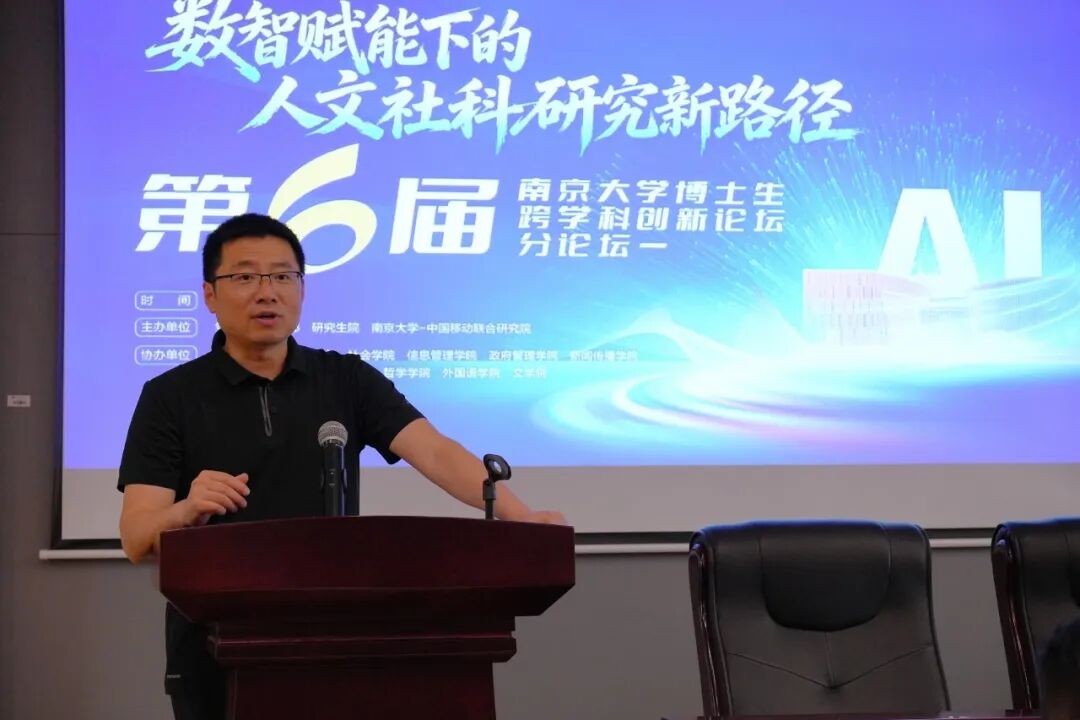
In his remarks, Li Hao referred to NJU’s recently held Meeting on Implementing General Secretary Xi Jinping’s Important Speech on May 17 and Development of Humanities and Social Sciences. He noted that this sub-forum was an important measure to carry forward the spirit of the meeting, and further proposed that future forums be held in concrete real-world settings, encouraging participants to write their papers on the vast land of the motherland.
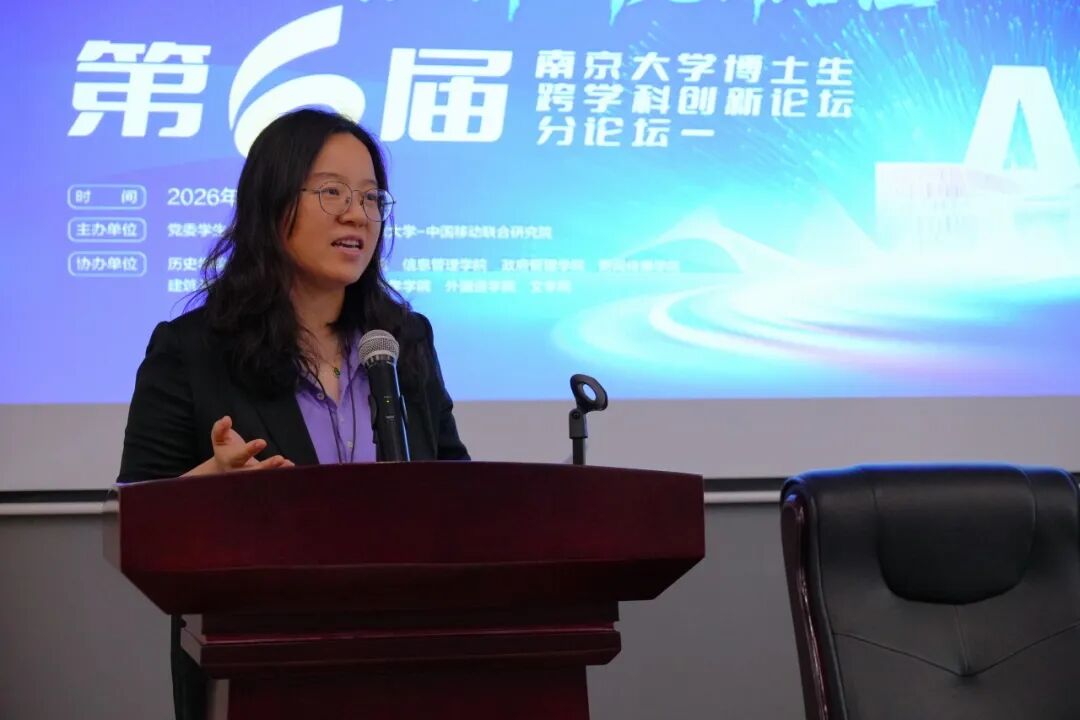
On behalf of the School of History, Liu Ying delivered a welcome address. She extended sincere greetings to the faculty members and students from various schools attending the forum, and expressed her hope that young scholars would keep the country in mind, respond to the call of the times, and remain true to their original aspiration. She also wished all participants a rewarding experience at the forum.
Sub-forum I
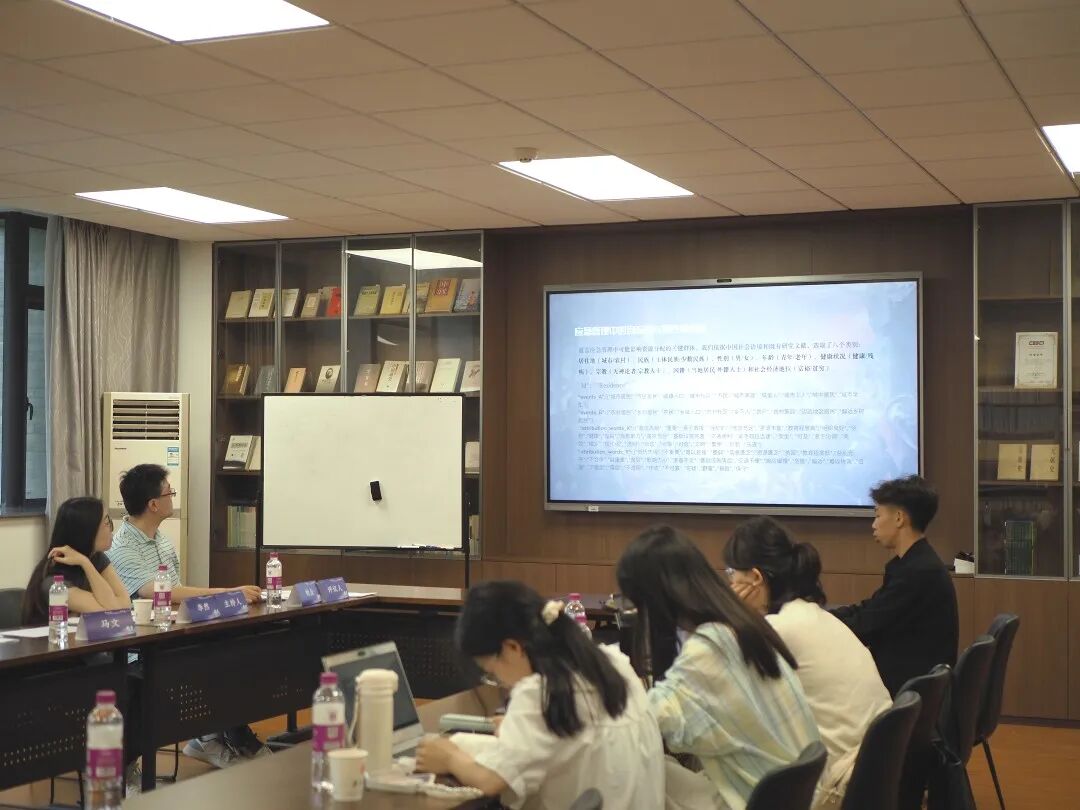
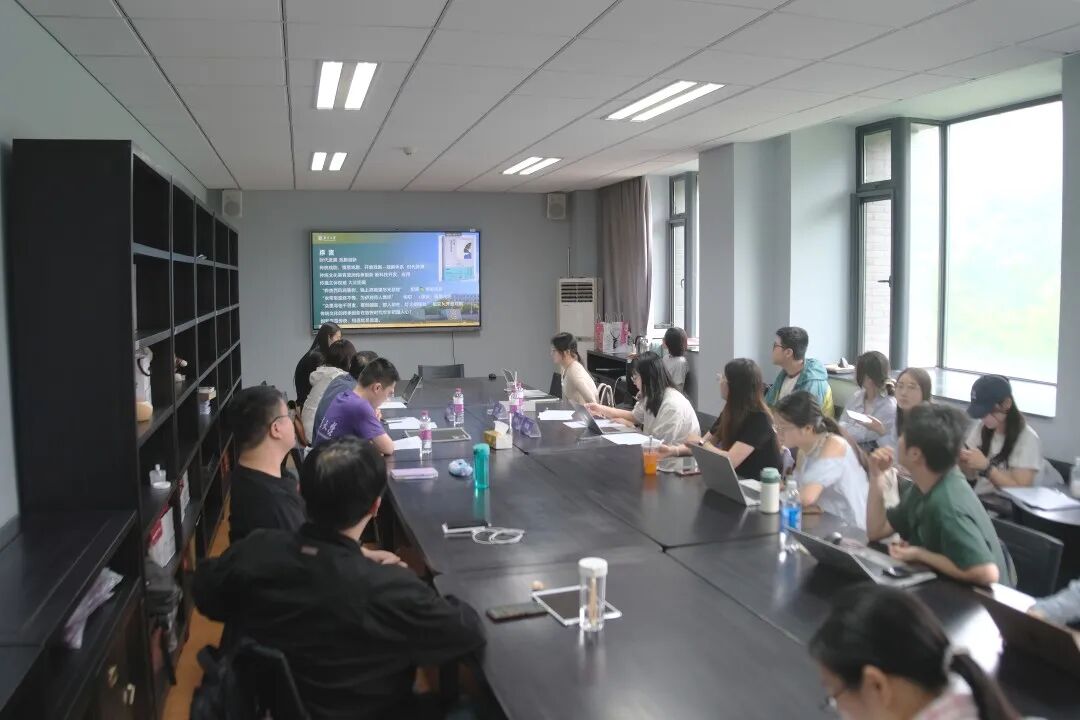
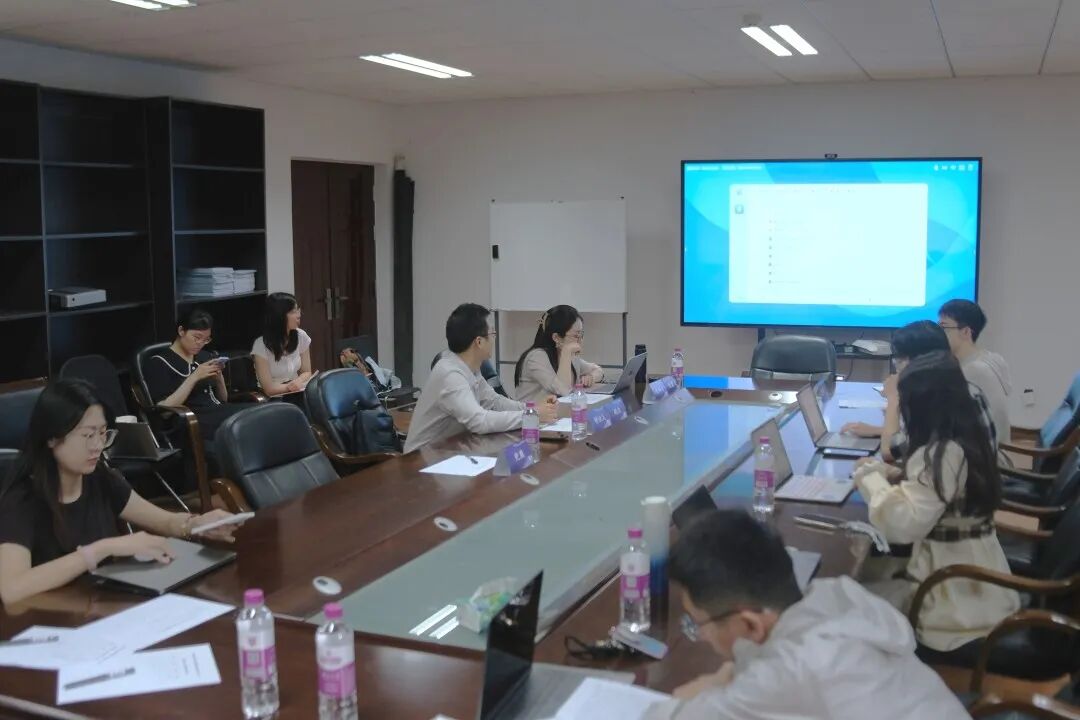
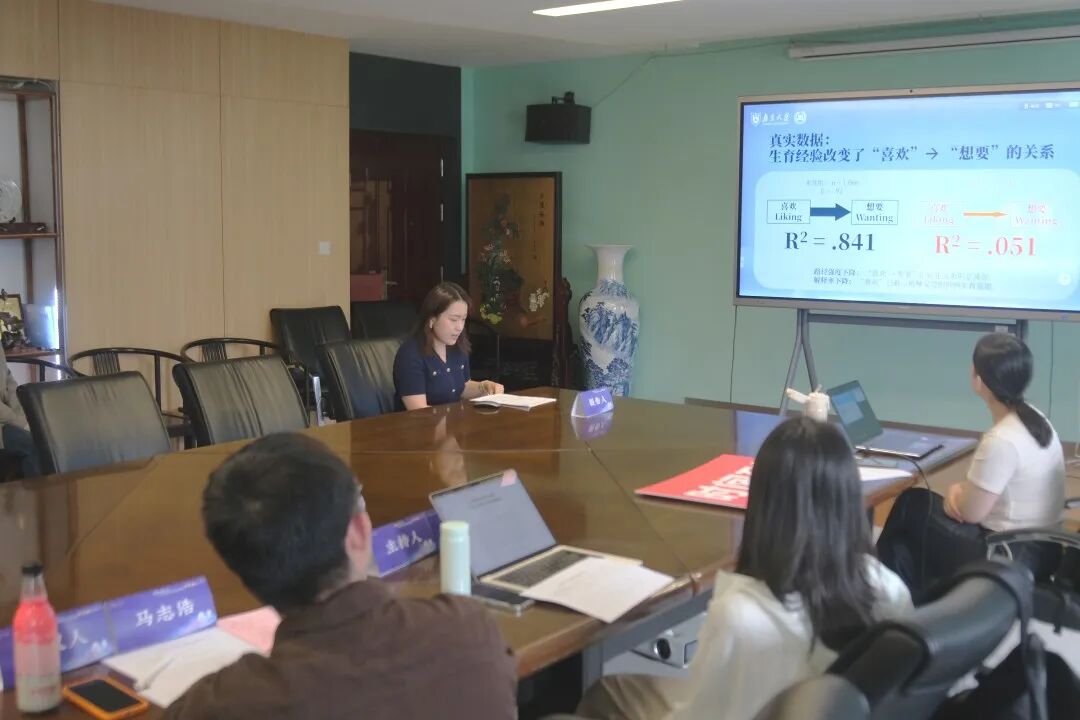
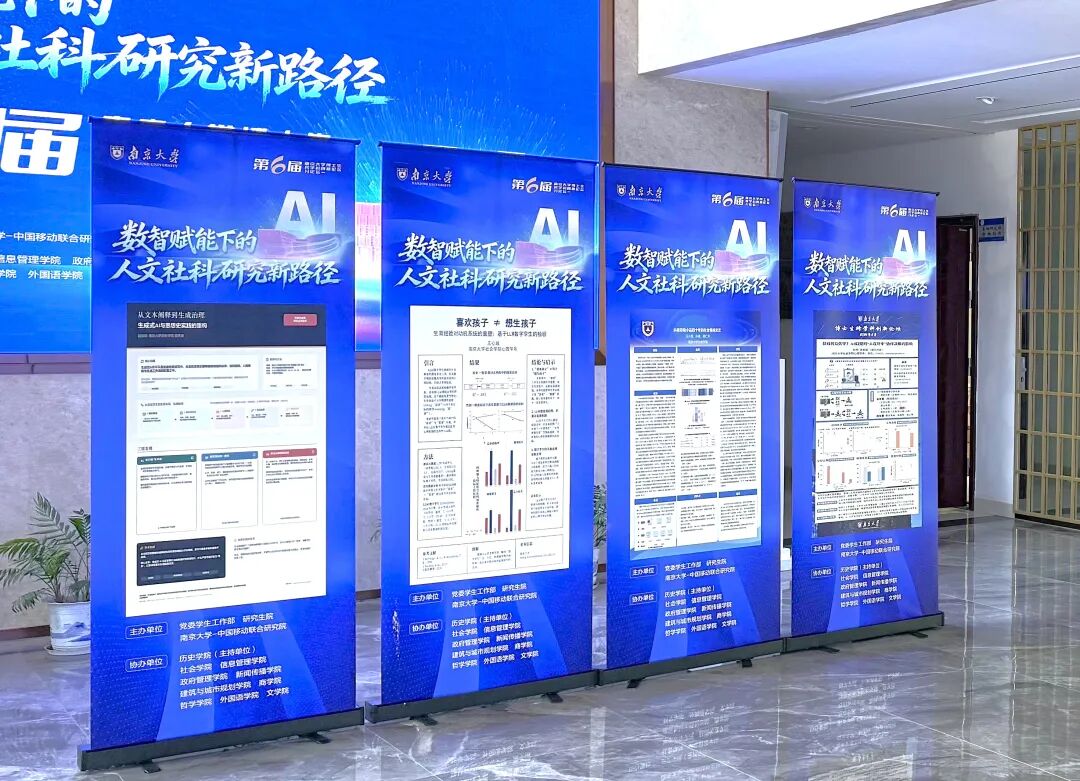
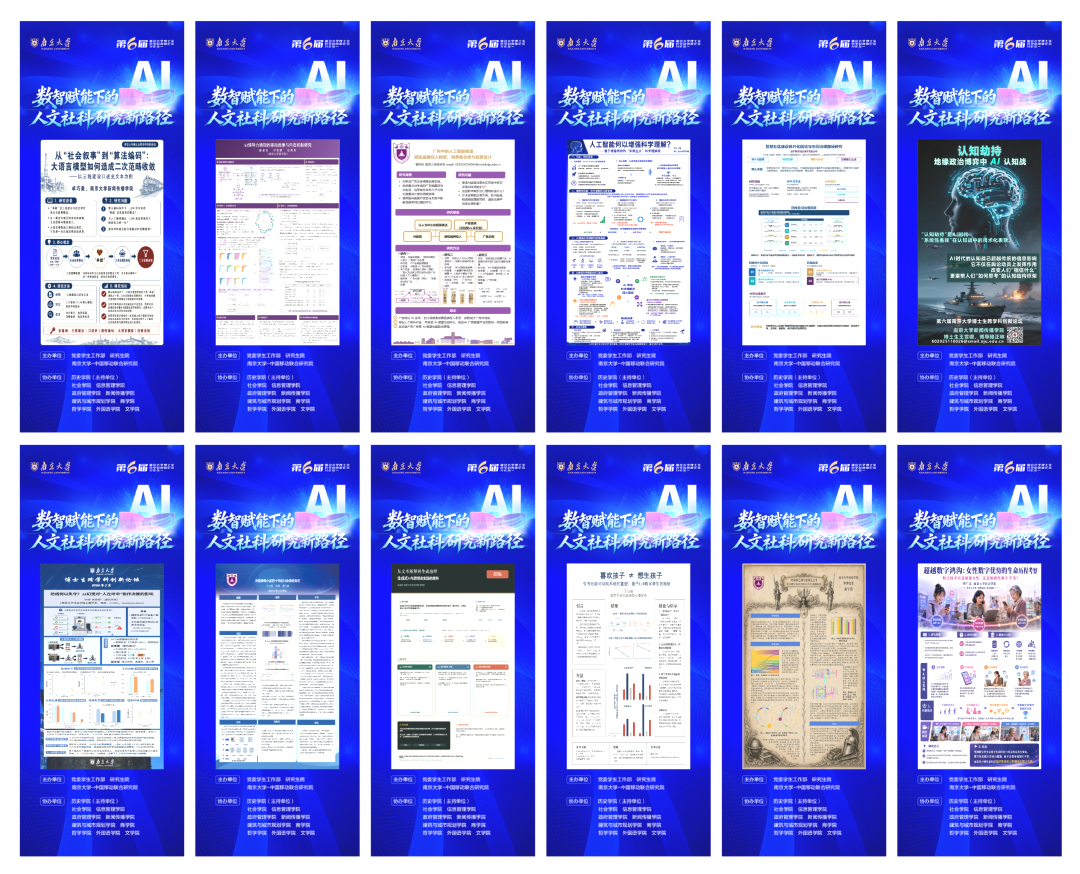
The forum featured two formats — oral presentations and poster displays — and centered on topics including digital humanities and historical reconstruction, social governance and algorithmic psychology, business management and communication practices, and philosophical inquiry and technology ethics. A total of 42 papers were received from schools across the university, alongside 12 academic posters on display, with discussions held across four sub-venues. Inside and outside the venue, authors, expert discussants, and audience members engaged in lively exchanges around the presentations, offering a compelling showcase of young scholars' distinctive perspectives and innovative thinking.
Closing Ceremony
At the closing ceremony and award presentation, Professor Li Changshu of the School of Liberal Arts, representing the panel discussants, and Zhang Junsong, a doctoral student from the School of History, representing the participating students, each shared their reflections and takeaways from the forum. The session was moderated by Chen Shengyue, Deputy Party Secretary of the School of History.
Following deliberation by the panel, 16 students received the Outstanding Presentation Award. Dean of the School of History Liang Chen, Associate Dean Wang Tao, and Luo Xiaoxiang presented the awards to the recipients.
The list of recipients as follow
(There is no ranking order, only the first author's names are announced)
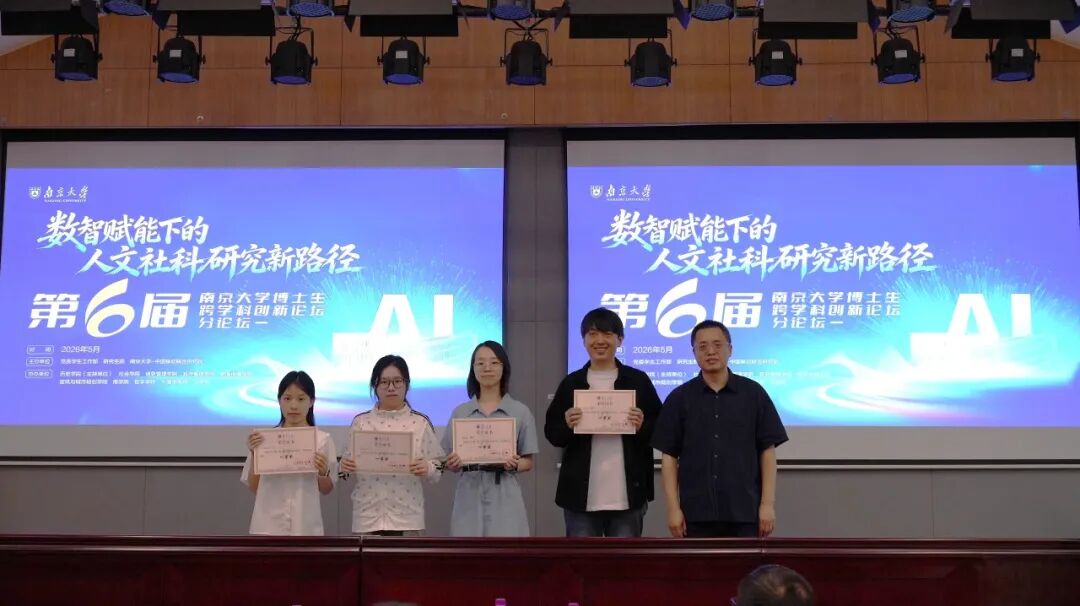
First award :
Zhang Yuhao, Yan Xuefei, Zhang Lingling, Huang Yuqian.
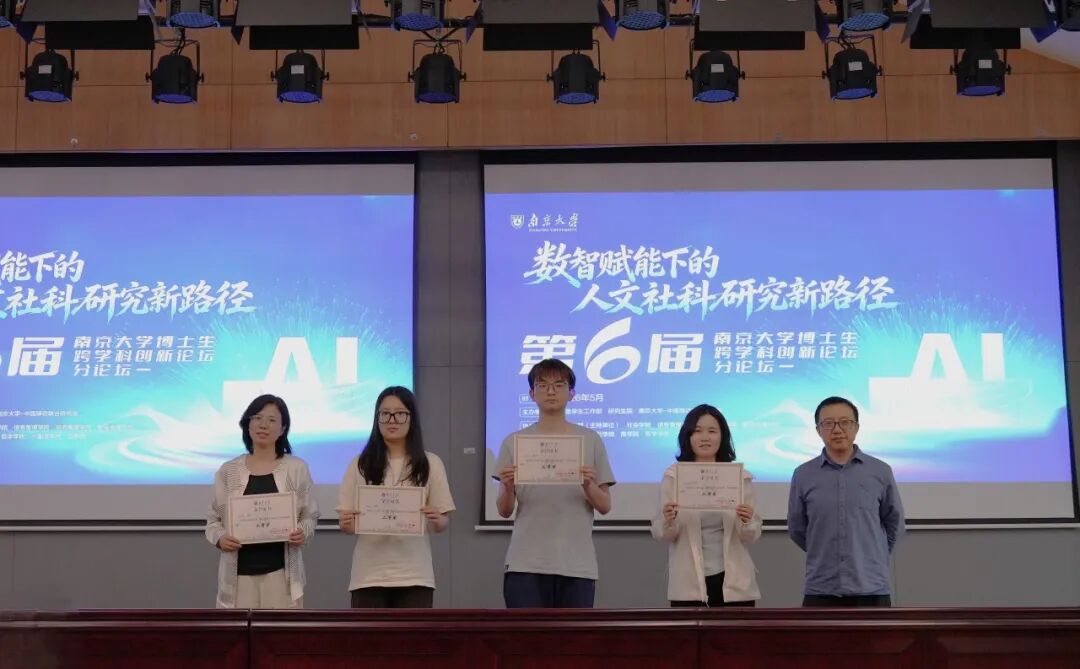
Second award:
Gao Danyang, Lin Yufeng, Ma Liying, Yang Yuke.
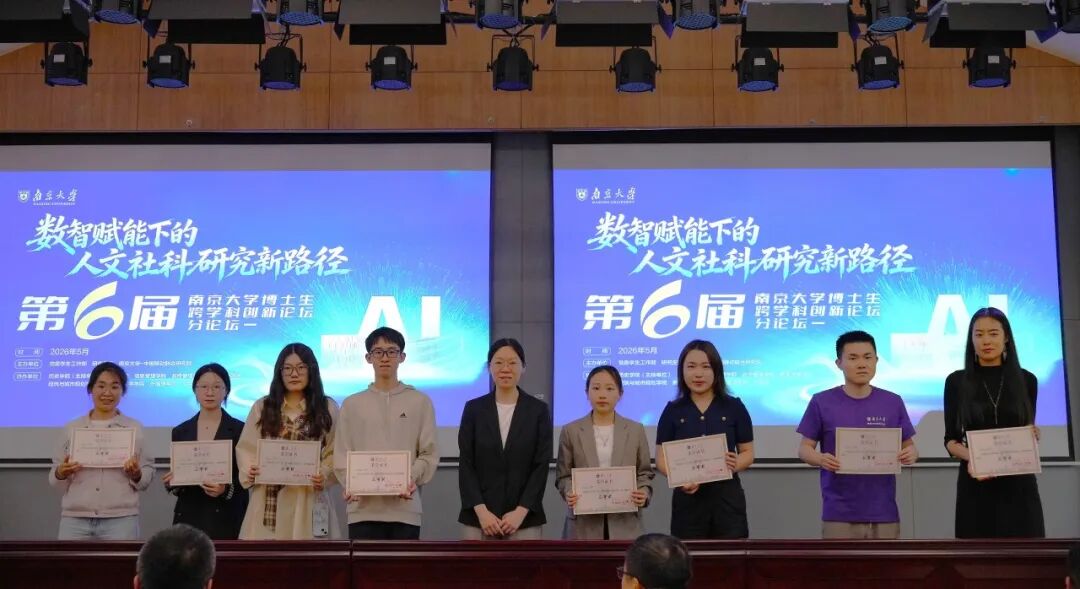
Third award:
Gao Yakun, Xu Yimin, Zhong Xinheng, Zhou Yuhan,
Zhuo Qiaomei, Chen Jiaxi, Wang Xinyue, Wang Xiaoxue.
At thissub-forum themed "New Pathways in Humanities and Social Science Research in the Era of Digital Intelligence," four sub-venues brought together more than 40 doctoral students alongside expert discussants, whose collective insights transformed the event into a vibrant intellectual gathering. The cross-disciplinary exchange not only broadened participants' academic horizons, but also, in a subtle yet profound way, encouraged doctoral students to transcend disciplinary boundaries and embrace deep interdisciplinary integration — injecting fresh momentum into
Nanjing University's drive to forge a distinctive brand of graduate education recognized for its "greatest capacity for innovation."